How To Paint Like The Impressionists - A Beginner's Guide
How To Paint Like The Impressionists
Quick Answer: To paint like the Impressionists, focus on capturing light and momentary impressions using loose brushwork and vibrant colors. Embrace outdoor painting and experiment with your color palette to create dynamic, expressive artworks. This guide will help you understand the principles of Impressionist painting, from its rich history to essential techniques, ensuring a rewarding experience for beginners eager to explore this captivating art form.
Painting can often feel daunting for beginners, especially when faced with the complexities of traditional techniques. Many aspiring artists are eager to express themselves but feel overwhelmed by the meticulous details demanded by classical styles. They yearn for a method that allows them to enjoy the painting process while also producing captivating results. This is where Impressionism shines—it offers a more relaxed, intuitive approach to capturing the world around us.
Impressionism emerged in the late 19th century as a revolutionary art movement that broke away from the rigid constraints of academic painting. It invites artists to let go of perfectionism and embrace spontaneity, making it an ideal choice for beginners. This guide will lead you through the history of Impressionism, essential materials, techniques, and tips to help you paint like the Impressionists.
Understanding Impressionism: A Brief History
Impressionism began in France in the 1860s and is characterized by a focus on light, color, and movement. The term itself is derived from Claude Monet's painting "Impression, Sunrise," which was displayed in the first Impressionist exhibition in
This movement sought to capture the fleeting moments of everyday life and the beauty of nature.
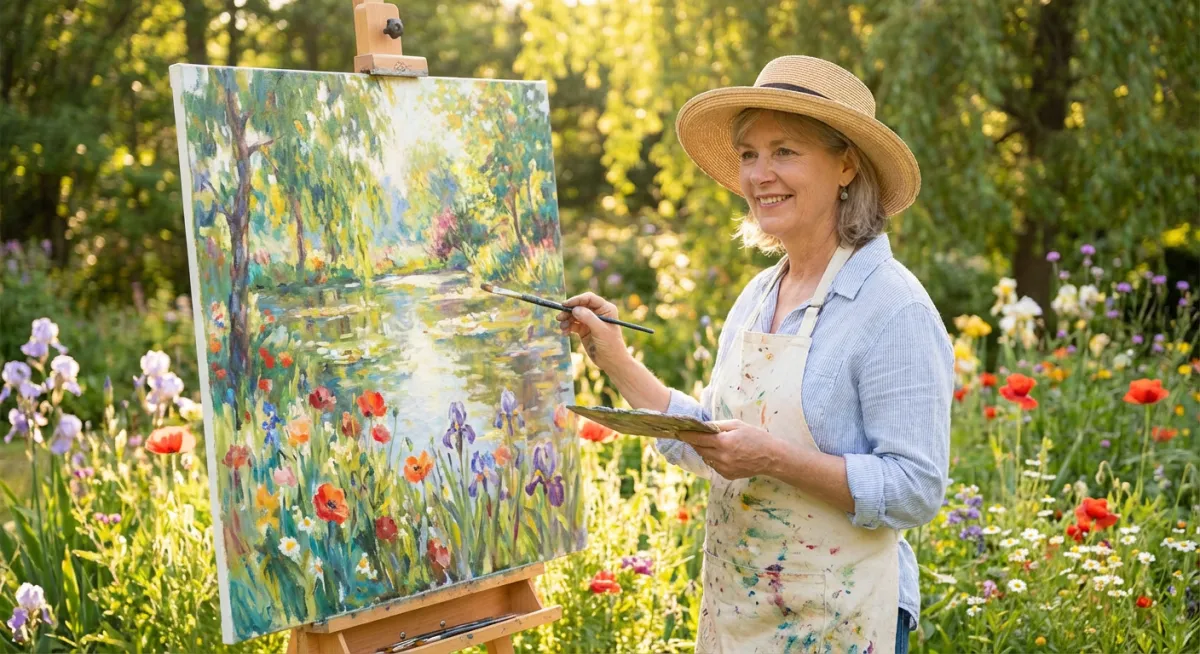
The Impressionists, including artists like Pierre-Auguste Renoir, Edgar Degas, and Camille Pissarro, often painted en plein air (outdoors) to capture the true essence of their subjects. They employed loose brushwork and vibrant colors to depict the effects of light and shadow, creating a sense of immediacy and movement in their works. As a beginner, understanding this historical context can provide you with valuable insight into the principles that define Impressionist painting.
The Impressionist movement was not merely an artistic trend; it was a response to the rapid changes occurring in 19th-century society, including the Industrial Revolution and urbanization. Artists sought to break free from the constraints of the salon exhibitions that dominated the art world, where traditional techniques and historical subject matter were favored. Instead, Impressionists portrayed modern life, focusing on leisure activities, urban scenes, and landscapes. This shift in subject matter reflected a broader cultural movement that celebrated individuality and personal expression.
The Impact of Impressionism on Modern Art
Impressionism's influence extends far beyond its own time. It has significantly shaped the trajectory of modern art movements such as Post-Impressionism, Fauvism, and even Abstract Expressionism. By prioritizing personal expression and perception over strict realism, Impressionism laid the groundwork for artists to explore new styles and methodologies.
Renowned art historian Robert Rosenblum noted that "Impressionism was the first art movement to express the joys and sorrows of modern life." This perspective highlights how Impressionism expanded the possibilities for artistic representation, allowing artists to explore their feelings and perceptions of the world around them. For beginners learning to paint, this notion of emotional expression can be incredibly liberating and empowering.
Essential Materials for Impressionist Painting
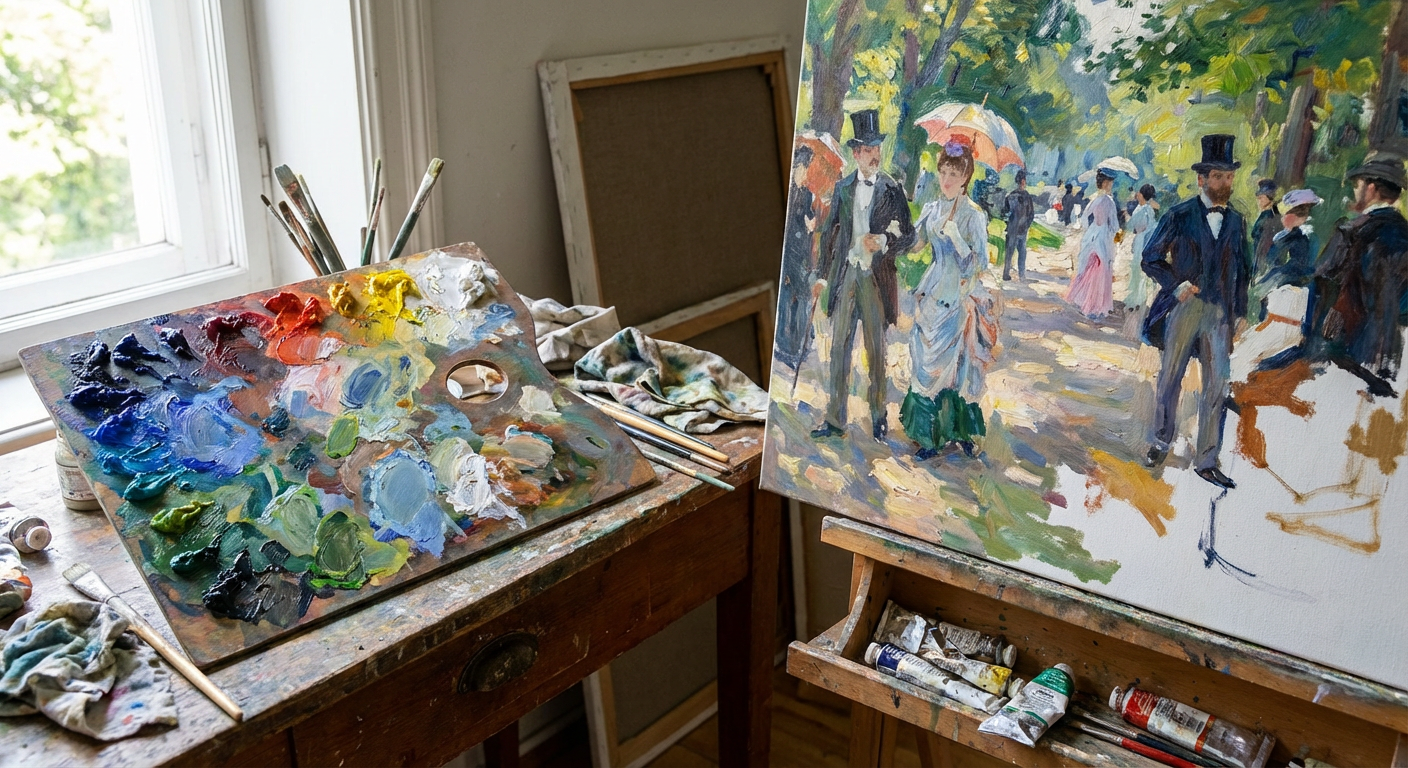
Before you can start painting, you need to gather the right materials. While Impressionism allows for flexibility and personal expression, certain tools can significantly enhance your ability to replicate this style. Here’s what you'll need:
Paints
Oil Paints: Traditional Impressionists used oil paints for their richness and blending capabilities. They allow for a range of textures and finishes.
Acrylic Paints: If you prefer a quicker drying time, acrylics can also be adapted to achieve an Impressionist effect. They can be thinned with water and provide vibrant color.
Brushes
Variety of Brushes: Use flat, round, and filbert brushes to create different textures and strokes. Each brush type lends itself to capturing moments differently.
Palette Knives: These can be great for mixing colors and applying paint thickly to create texture. They can also be used for scraping and layering.
Canvas
Primed Canvases: Choose a canvas or canvas board that is pre-primed to save preparation time. Consider the texture of the canvas, as it can affect your brushwork.
Palette
Mixing Palette: A flat surface for mixing your colors is essential. A stay-wet palette can help keep your acrylics from drying out too quickly.
Easel
Portable Easel: If you plan to paint outdoors, a lightweight, portable easel is ideal for plein air painting. Look for one that is adjustable for different heights.
Mediums
Linseed Oil or Water: These can be added to your paint to alter its consistency and drying time. Experiment with different mediums to find what works best for you.
Rags or Paper Towels
For Cleaning: Keep some rags or paper towels handy to wipe brushes and clean hands. This will help you maintain a tidy workspace.
Having the right materials will set a strong foundation for your painting journey. As you start experimenting with these tools, remember that the process of painting is just as important as the final product. The materials you choose can greatly influence your experience, so take the time to explore and find what resonates with you.
Techniques to Capture Light and Color
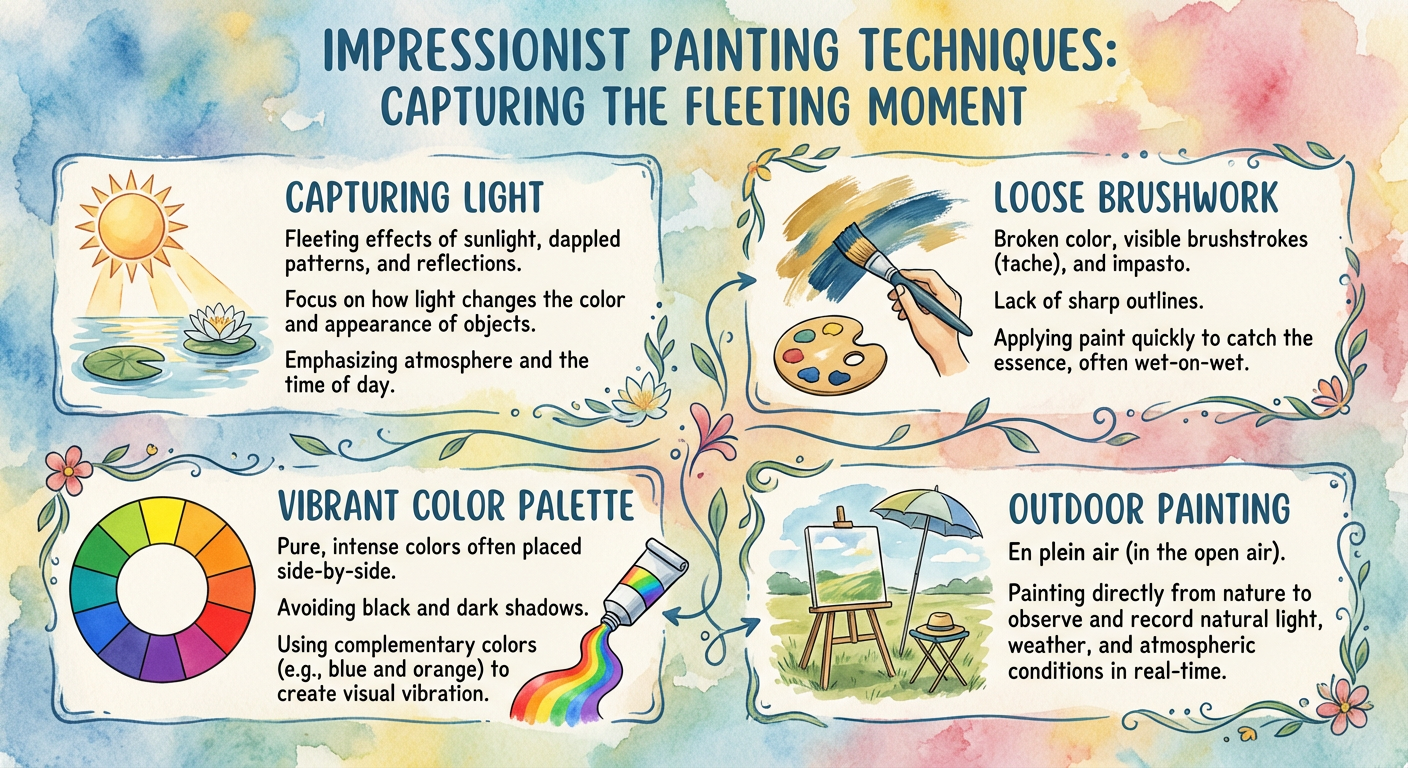
Impressionism emphasizes the effects of light and color over the details of the subject. Here are some techniques to help you capture these elements in your paintings:
Color Mixing
Use a Limited Palette: Many Impressionists used a limited palette to create harmony in their works. This not only simplifies color mixing but also helps in achieving a cohesive look.
Opt for Pure Colors: Instead of muddying colors, use pure hues to achieve vibrant effects. Layering these pure colors can create depth and luminosity.
Light Effects
Observe Natural Light: Spend time outside observing how light changes throughout the day. Notice how it affects colors and shadows, and try to capture these changes in your work.
Study Shadows: Shadows in Impressionist paintings are often painted with unexpected colors, such as purples or blues, rather than just greys or blacks.
Broken Color Technique
Apply Dabs of Color: Instead of blending colors thoroughly, apply small dabs of different colors next to each other to create an optical mixing effect. This technique enhances the vibrancy of your painting and captures the essence of light.
Capturing Movement
Quick Brushstrokes: Use quick, loose brushstrokes to convey movement and spontaneity. This is especially important in scenes with people or nature, where capturing the essence of the moment is crucial.
When you focus on these techniques, you'll begin to see how light and color can transform your paintings. Remember that practice is key—experiment with different approaches until you find what resonates with you. Impressionism is about feeling and expression, so allow yourself the freedom to explore.
The Importance of Observation
One of the most critical skills you can develop as an artist is the ability to observe the world around you. Impressionist painters were keen observers of their surroundings, and their works reflect this attentiveness to detail, light, and atmosphere. Here are some tips to enhance your observational skills:
Spend Time in Nature: Take walks in parks, gardens, or natural settings. Pay attention to how the light changes on different surfaces and how colors interact in various environments.
Keep a Sketchbook: Carry a small sketchbook to make quick sketches of scenes that inspire you. This practice will help you become more comfortable with your observations and serve as a reference for your paintings.
Practice Gesture Drawing: This technique involves quick, loose sketches that capture the essence of movement. Gesture drawing can help you understand form and composition, which are essential for creating dynamic Impressionist works.
Brushwork Techniques Used by Impressionists
One of the hallmarks of Impressionist painting is the unique brushwork that creates texture and movement. Here are some essential brushwork techniques to incorporate into your practice:
Short, Staccato Strokes
Build Texture: Use short, choppy strokes to create texture and vibrancy in your painting. This technique helps convey the essence of a scene without becoming overly detailed.
Long, Fluid Strokes
Capture Flow: For subjects like water or skies, long, sweeping strokes can convey fluidity and movement. This technique can create a sense of calm or drama, depending on how you apply it.
Layering
Build Depth: Start with a base layer and add subsequent layers for depth. This technique is particularly effective for landscapes, where the interplay of light can be complex. Allow each layer to dry before adding new colors.
Scumbling
Create Soft Edges: Use a dry brush to apply a light layer of paint over a dry layer, allowing some of the underlying color to show through. This technique softens edges and adds dimension, contributing to the ethereal quality of Impressionist works.
Mastering these brushwork techniques will not only enhance your Impressionist style but also make your painting process more enjoyable. Take the time to practice each technique, allowing your unique style to emerge naturally. As you paint, let go of the need for perfection and focus on the joy of creation.
Creating Depth and Texture in Your Paintings
Creating depth and texture is crucial in achieving the Impressionist effect. Here are key strategies to help you develop these elements in your work:
Foreground, Midground, and Background
Layer Your Composition: Divide your painting into three sections. The foreground should contain the most detail, while the background can be softer and less defined. This layering creates a sense of depth and guides the viewer's eye.
Use of Color
Warm and Cool Colors: Warm colors (reds, oranges) advance and create a sense of closeness, while cool colors (blues, greens) recede, enhancing depth perception. Utilize this contrast to establish spatial relationships in your work.
Texture Techniques
Impasto: Apply thick layers of paint with a palette knife or your brush. This technique adds physical texture and can create dynamic visual effects, especially in landscapes. The texture can enhance the sensory experience of your painting.
Light and Shadow
Contrast: Use contrasting colors to depict light and shadow. Observing how light interacts with different surfaces can guide your color choices and enhance the overall composition.
By incorporating these strategies, you'll create paintings that feel rich and dimensional. Remember that creating depth and texture takes time and experimentation, so be patient with your progress. As you engage with these techniques, you will develop a deeper understanding of how to paint like the Impressionists.
Plein Air Painting: Taking Your Art Outside
Plein air painting, or painting outdoors, is a quintessential aspect of the Impressionist movement. It allows artists to capture the changing light and atmosphere of a scene in real-time. Here’s how to get started:
Choosing a Location
Find Inspiration: Select a location that inspires you, whether it’s a bustling city street, a serene park, or a vibrant garden. Consider the time of year and how it affects the light and colors.
Prepare Your Kit
Pack Light: Take only the essential materials you need for painting outdoors. This might include a portable easel, a small palette, a few brushes, and a limited selection of paints. Being organized will help you focus on your painting.
Time of Day
Chase the Light: Early morning or late afternoon offers the best natural light for painting. Observe how the colors shift as the sun moves across the sky. These moments can be fleeting, so be prepared to capture them quickly.
Set a Timer
Work Quickly: To mimic the Impressionists, set a timer and work quickly to capture the essence of the scene. This will help you focus on light and color rather than getting bogged down in details. Embrace the spontaneity of the moment.
Plein air painting can be a liberating experience and will allow you to develop your own style and approach. Embrace the spontaneity that comes with outdoor painting and enjoy the connection with nature. Many Impressionists found that painting in nature not only inspired them but also helped them refine their skills and techniques.
Inspiration from Famous Impressionist Artists
Looking to the masters of Impressionism can provide immense inspiration as you develop your skills. Here are some key figures whose works you might study:
Claude Monet
Water Lilies Series: Monet's exploration of light and color in his water lily paintings is a perfect example of Impressionism. He often painted the same scene at different times of day to capture the changing light. This series showcases his innovative approach to color and form.
Pierre-Auguste Renoir
Dance at Le Moulin de la Galette: Renoir's ability to depict movement and the interplay of light and shadow in this piece is a great study for aspiring Impressionists. His use of vibrant colors and lively brushstrokes captures the joyous atmosphere of the scene.
Edgar Degas
Ballet Rehearsal: Degas's focus on movement and his unique composition techniques offer valuable lessons in capturing dynamic scenes. His innovative angles and perspectives challenge traditional views and invite viewers into the action.
Camille Pissarro
The Boulevard Montmartre, Spring: Pissarro expertly depicts the effects of light in urban scenes, making his work a rich source of inspiration. His ability to capture the vibrancy of city life is a hallmark of Impressionism.
Berthe Morisot
The Cradle: As one of the prominent female Impressionists, Morisot’s work often focused on domestic life and the intimate moments of women. Her brushwork is delicate and fluid, providing a softer interpretation of Impressionist techniques. Studying her work can offer a different perspective on how to capture personal experiences through art.
By studying these artists and their techniques, you can gain valuable insights into the principles of Impressionism. Try to replicate their works or use them as a springboard for your own creative explorations. Analyzing their brushwork, color choices, and compositions will deepen your understanding and inform your own practice.
Tips for Developing Your Own Impressionist Style
As you practice painting like the Impressionists, it’s essential to develop your own style. Here are some tips to guide you on this journey:
Experimentation
Try New Techniques: Don’t be afraid to experiment with different brushwork, color combinations, and compositions. The beauty of Impressionism lies in its flexibility and the personal touch each artist brings.
Find Your Palette
Create a Color Palette: Develop a signature color palette that resonates with you. This will help unify your works and give them a distinctive feel, making your art immediately recognizable.
Embrace Mistakes
Learn from Errors: Every artist makes mistakes. Instead of being discouraged, view them as learning opportunities that can lead to new ideas. Some of the most celebrated artworks arose from unexpected accidents.
Personal Inspiration
Draw from Life: Paint subjects that inspire you personally. Whether it’s a favorite landscape, a bustling city scene, or a quiet moment at home, capturing your unique perspective will lead to more authentic work.
Take Your Time
Patience is Key: Developing your style takes time and practice. Give yourself permission to grow and evolve as an artist. The journey is just as important as the destination, so enjoy every step.
Seek Feedback
Join Art Communities: Engage with other artists and join painting groups or classes. Sharing your work and receiving constructive feedback can help you improve and refine your style. Online platforms like social media can also serve as great spaces to share your art and connect with fellow Impressionists.
With these tips in mind, you’ll be well on your way to creating paintings that reflect your personal interpretation of Impressionism. Enjoy the process and allow your creativity to flourish. The key is not to rush but to immerse yourself in the experience.
Key Takeaways
Impressionism emphasizes capturing light and color through loose brushwork and spontaneity, making it accessible for beginners.
Essential materials include oil or acrylic paints, a variety of brushes, and a portable easel for plein air painting.
Techniques such as broken color, layering, and observing natural light are key to achieving the Impressionist effect.
Familiarize yourself with brushwork techniques and strategies for creating depth and texture to enhance your paintings.
Plein air painting allows you to connect with nature and capture the momentary essence of your subject.
Study the works of famous Impressionist artists for inspiration, and don’t hesitate to experiment with your own style.
Frequently Asked Questions
Q: What is Impressionism?
Impressionism is an art movement characterized by loose brushwork and an emphasis on light and color, focusing on capturing the essence of a moment.
Q: Do I need special brushes to paint like the Impressionists?
While not required, using a variety of brushes can help achieve different textures and effects that are characteristic of Impressionist paintings.
Q: Can I use acrylics instead of oils?
Yes, many beginners use acrylics, and they can be adapted to create an Impressionist style that mimics the richness of oils.
Q: How do I select a subject for my Impressionist painting?
Look for subjects that inspire you, especially those that highlight light, movement, and the beauty of everyday life.
Q: What is plein air painting?
Plein air painting is creating artwork outdoors to capture the natural light and atmosphere, a practice central to the Impressionist movement.
Conclusion
Painting like the Impressionists is an exciting journey that invites you to explore your creativity while embracing the beauty of the world around you. With a focus on light, color, and spontaneity, you’ll find that this approach not only enhances your skills but also allows you to enjoy the process of painting.
By understanding the history of Impressionism, gathering essential materials, and practicing key techniques, you’ll be well on your way to creating expressive works that reflect your own artistic vision. Remember to keep experimenting and learning from both your successes and challenges.
Join the Paint The Impressionists Course with Moore Art Today
If you're ready to take your painting skills to the next level and fully immerse yourself in the world of Impressionism, consider joining the Paint The Impressionists course with Moore Art today.
This course will provide you with structured guidance, valuable insights, and the encouragement you need to develop your unique style. Don’t miss the opportunity to unleash your creativity—sign up now!
Written by Rod Moore