Plein Air Painting for Beginners: How to Start Painting Outdoors
In short: Plein air painting means painting outdoors, directly from life, rather than working from photographs in the studio. For beginners, the key is a light, simple kit, a small panel, and a clear process: choose your idea, simplify the scene into big shapes, block in the main values and colours before the light changes, then refine a little and stop. You don't need to be an expert to start. Pack a hat, keep your kit simple and have a go.
There's nothing quite like setting up your easel outdoors, feeling the breeze and trying to capture the light before it changes. Plein air painting is challenging, a little bit wild and enormously rewarding. It's also one of the fastest ways I know to train your eye as a painter.
Plein air painting has been a big part of my own journey. Back in 2011 I launched a TV show called Plein Air Painting TV, even though, to be honest, I really wasn't that good at painting at the time. That show ran for 13 episodes and was broadcast around Australia and New Zealand. It taught me that you don't need to be an expert to start painting outdoors. You just need a simple kit, a simple process and the willingness to have a go.
In this guide to plein air painting for beginners, I'll explain what plein air painting is, what you need, how to start step by step, which medium to choose and the tips that will save you a lot of frustration.
What Is Plein Air Painting?
Plein air is French for "in the open air". Plein air painting simply means painting outdoors, directly from life, rather than working from photos in the studio.
The Impressionists made it famous. Painters like Monet and Sisley worked outdoors to capture the fleeting effects of light and atmosphere. Here in Australia, artists of the Heidelberg School, such as Arthur Streeton and Tom Roberts, took their easels into the bush to paint our own extraordinary light. If you'd like to dig into the history, have a read of Four Schools Of Impressionism and How To Paint Like The Impressionists.
Why Should You Paint Outdoors?
Photos are useful, but they flatten things. Cameras often turn shadows into black holes and bleach out the lights. Outdoors, your eyes see so much more: the colour in the shadows, the subtle shifts of temperature and the true sense of space and atmosphere.
Plein air painting also forces you to:
Simplify. You can't paint every leaf before the light moves, so you learn to see big shapes.
Make decisions quickly. What's the idea? Where's the focal point? What can I leave out?
Observe colour and value. You learn to judge how light or dark, and how warm or cool, things really are.
Enjoy the process. It's hard to beat a morning painting by the river or the beach.
Even if most of your work happens in the studio, time spent painting outdoors will make your studio paintings better.
What Do You Need for Plein Air Painting? A Simple Kit
The golden rule of plein air painting is to keep your kit light and simple. You'll be carrying it, setting it up and packing it away, often in wind and changing weather.
What paints do I need?
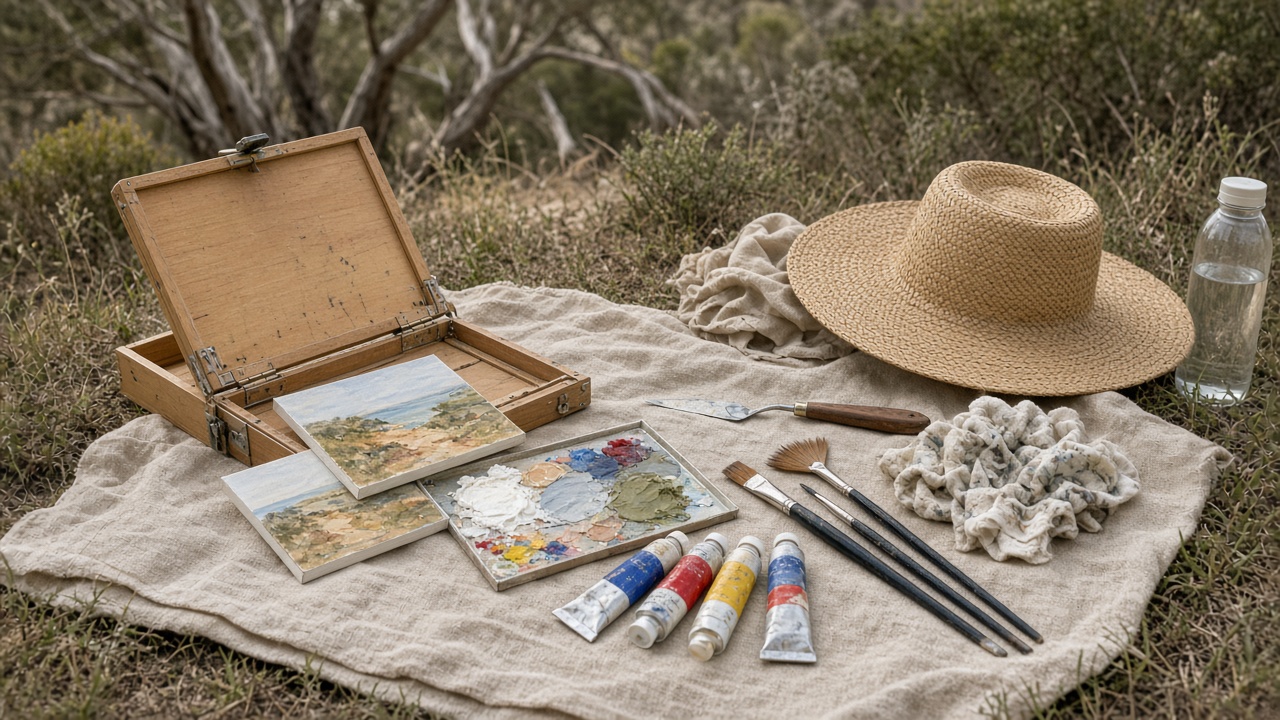
Take a limited palette: the three primaries (a blue, a red and a yellow) plus white. Fewer tubes means a lighter bag, quicker mixing and more harmonious paintings. It's the same principle at the heart of the Moore Method of Painting, which starts with just those three colours.
What brushes and palette knife do I need?
A few brushes are plenty. The Moore Method uses three: a flat brush, a fan brush and a script liner brush. Add a palette knife for mixing (and for scraping back if you need to).
What painting surfaces should I use?
Small canvas boards or panels are ideal. They're light, they fit in a bag and they're quick to cover before the light changes. Many plein air painters start with small sizes for exactly this reason.
What easel or pochade box do I need?
A lightweight easel or a pochade box (a compact box that holds your panel and palette) keeps everything at hand. You don't need anything fancy to start. Some painters even work sitting down with the panel on their lap.
What should I take for comfort and safety?
This is the part beginners forget. Pack:
a hat, sunscreen and sunglasses (the Australian sun is no joke)
water and a snack
insect repellent
paper towel or rags and a rubbish bag
a small stool if you prefer to sit
a plastic bag or box to carry a wet painting home
How Do You Start Plein Air Painting Step by Step?
Outdoors, the same process I use in the studio becomes even more valuable. When the light is moving and the wind is blowing, a clear process stops you panicking.
Step 1: How do I find a subject?
Walk around before you set up. Look for a scene with a clear centre of interest, a few big shapes and an interesting pattern of light and shadow. Ask yourself what excites you about it. Is it the light on the water? A dark headland against a bright sky? That's your idea.
A simple viewfinder helps a lot. Make a frame with your fingers or cut a small window in a piece of card, and look through it to crop the scene down to a simple composition.
Step 2: How do I decide on the light?
The light will change, sometimes quickly. Shadows move and the sun goes behind a cloud. So decide early which light effect you're painting, and stick with it. Don't chase the light around the canvas for two hours. It's one of the most important plein air lessons.
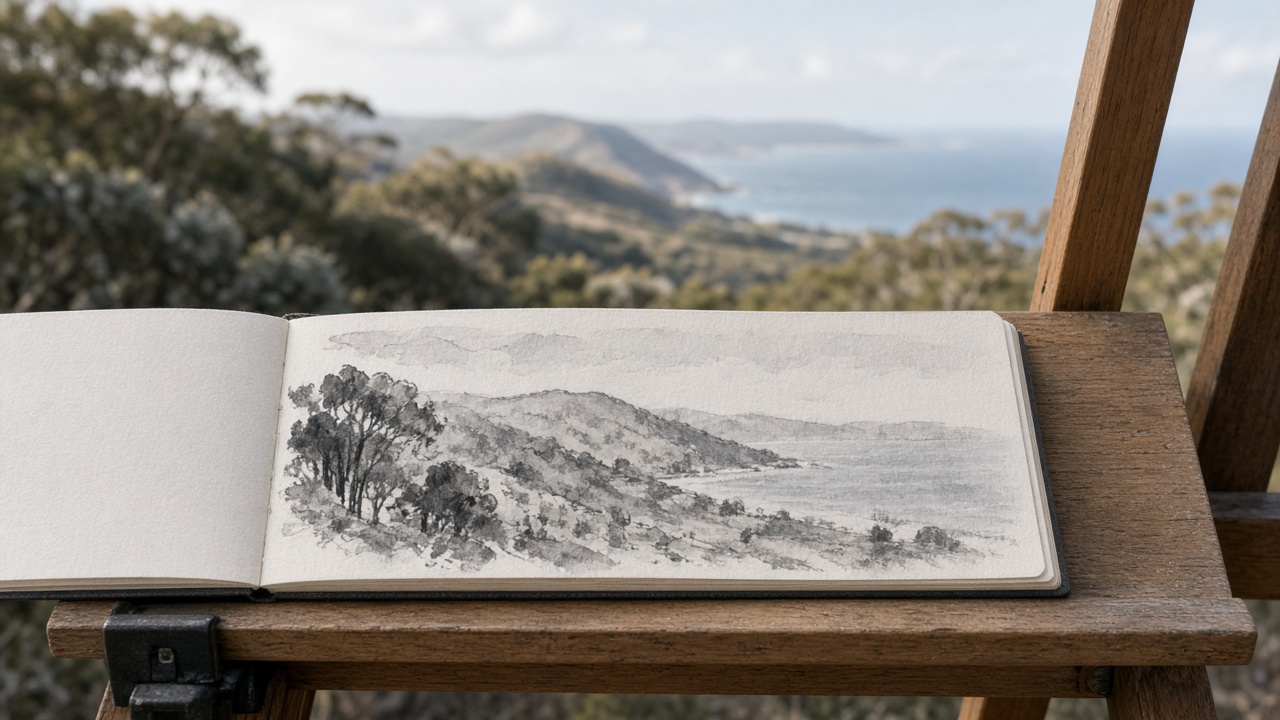
Step 3: How do I simplify the scene into big shapes?
Do a quick thumbnail sketch if you like, then draw the big shapes on your panel with a brush and thin paint. Find the horizon, the largest dark mass, the main light mass and your focal point. You can move or leave out anything that doesn't help the painting.
Step 4: How do I block in quickly?
Cover the panel with the main masses of value and colour, using your largest brush. Work from big to small, and from the largest shapes to the smaller ones. This is where you capture the light effect you chose in Step 2, so work with purpose. If the block-in reads well, you have a painting.
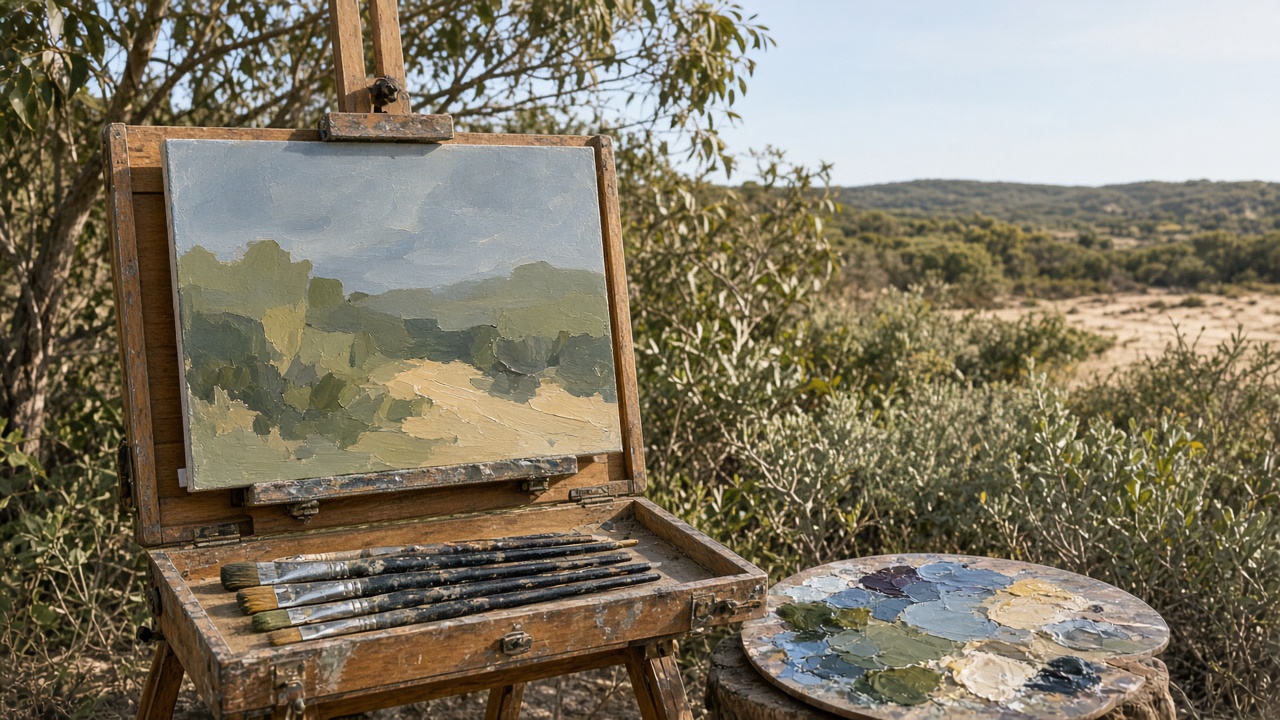
Step 5: How much should I refine before I stop?
Use the remaining time to model a few forms, adjust the warms and cools, soften some edges and sharpen others near the focal point. Then stop. A fresh, lively plein air sketch is worth far more than an overworked one. Any final adjustments can be made back in the studio.
What Is the Best Medium for Plein Air Painting?
There's no single best medium. Each has its pros and cons outdoors.
Oils stay wet, so you can keep working and blending, and they handle changing conditions well. You'll need a way to carry a wet painting home.
Water-mixable oils give you most of the feel of oils without solvents. That makes them handy outdoors and for travel.
Acrylics dry fast and clean up with water. That's great for layering, but on a hot day they can dry on the palette before you've mixed them, so work quickly and keep your paint fresh.
Gouache is compact and quick-drying, and perfect for small studies in a sketchbook when you're travelling light.
My advice for beginners is to start with the medium you already use at home. Plein air is challenging enough without learning a new paint at the same time.
How Long Should a Plein Air Painting Take?
Less time than you think. Because the light keeps shifting, many plein air painters aim to capture the main effect within a session of an hour or two. Working small helps enormously.
Think of your early outdoor paintings as studies, not masterpieces. Their job is to teach you to see and to record the light. Several quick studies will teach you far more than one long, frustrating session.
What Are the Best Plein Air Painting Tips for Beginners?
Here's what I'd want every beginner to know before their first outing:
Start close to home. Your backyard, a local park or the beach down the road is perfect.
Go early or late in the day. The light is often more interesting, and shadows give your scene shape.
Paint small. It's less daunting, quicker and easier to carry.
Use a limited palette. Fewer colours means faster, cleaner mixing.
Put out plenty of paint. Not using enough paint is the most common issue I see in workshops, and it matters even more outdoors. More on that in Five Ideas That Will Improve Your Painting.
Squint. It simplifies the scene into lights and darks.
Keep your palette and canvas out of direct sun if you can. Bright sun on your surface makes it hard to judge values.
Take a photo when you start. It's a handy record of the light if you want to finish the painting in the studio.
Don't worry about onlookers. People are usually just curious. Most will tell you how wonderful it is that you're painting!
Keep going. Your first few outdoor paintings may feel rough. That's completely normal. Every painting teaches you something.
Plein Air vs Studio Painting: Do You Need Both?
You don't have to choose. Plein air and studio painting work beautifully together.
Plein air teaches you to see true colour, light and atmosphere and to make quick decisions. The studio gives you time to think, design and refine larger works. Many painters bring their small outdoor studies (and the photos they took on location) back into the studio as reference for bigger paintings. The studies remind you what the light really felt like.
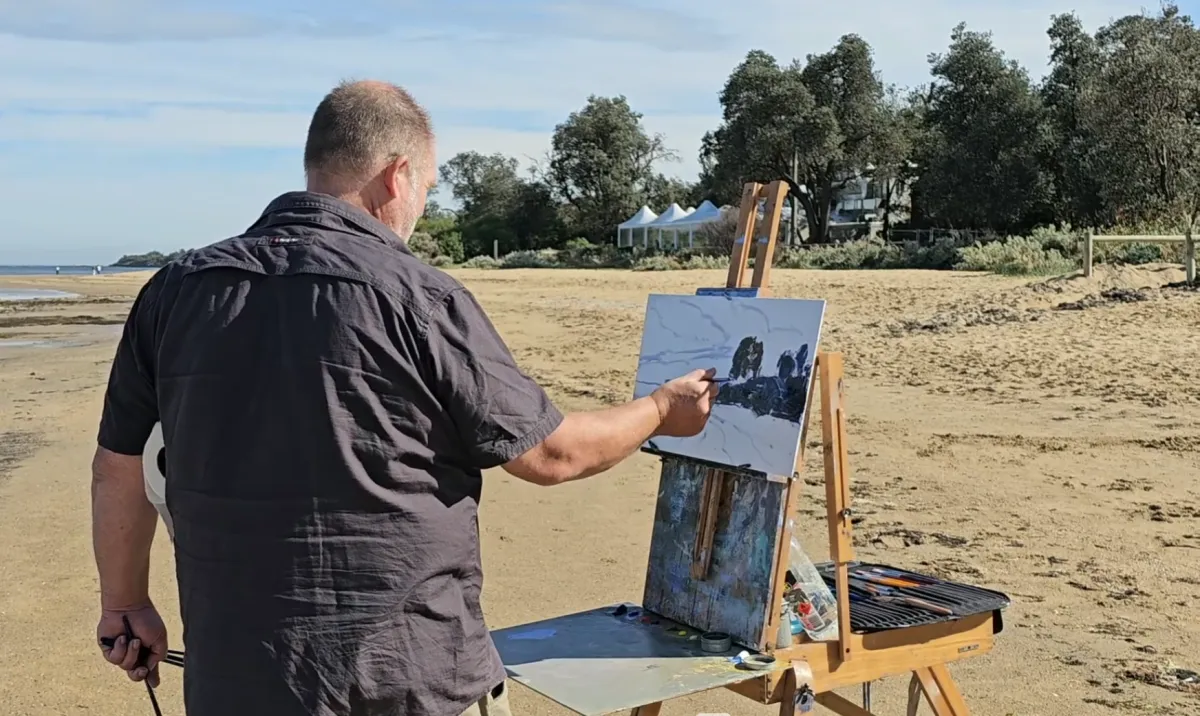
Can I Paint Plein Air With Others?
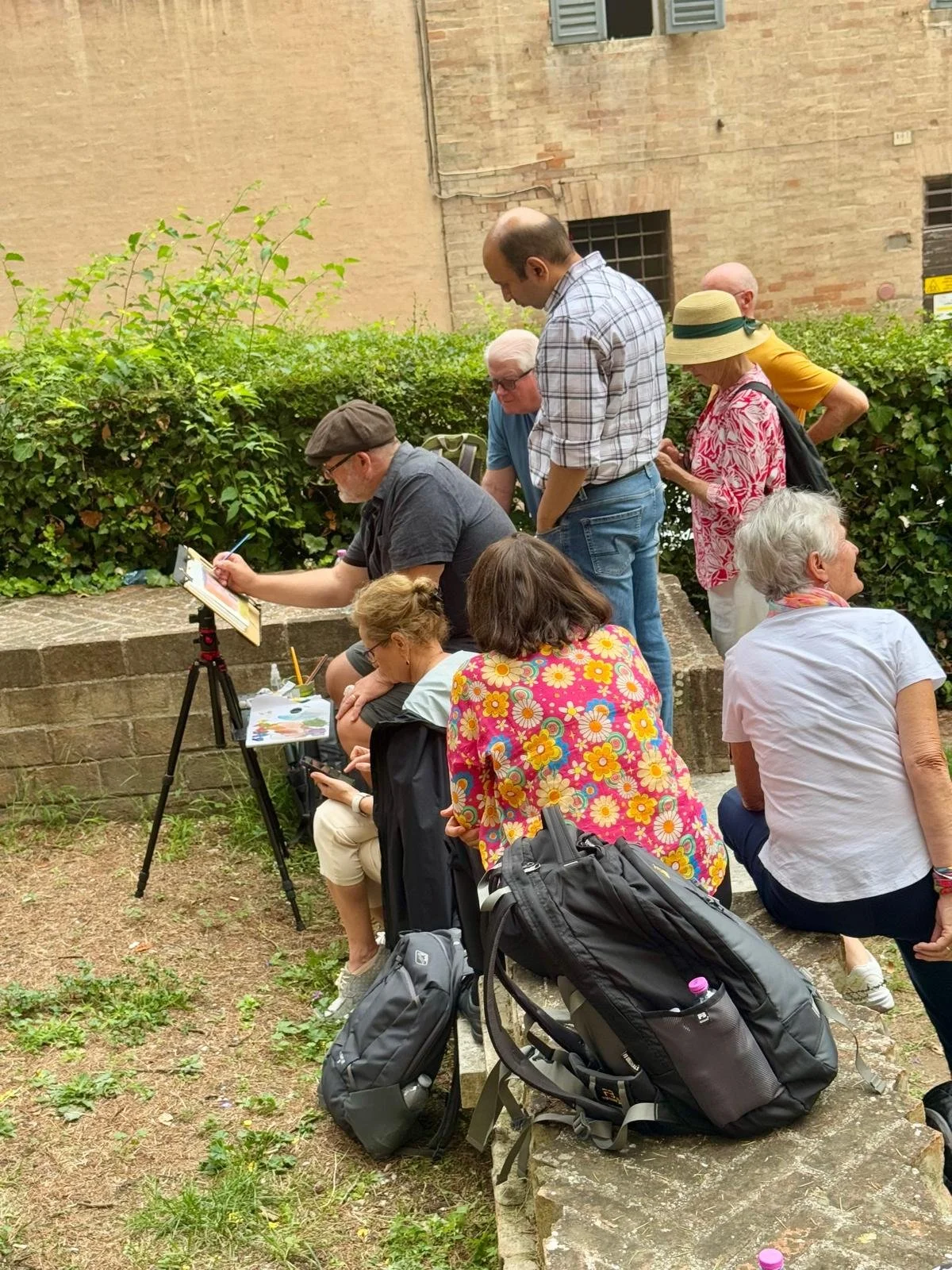
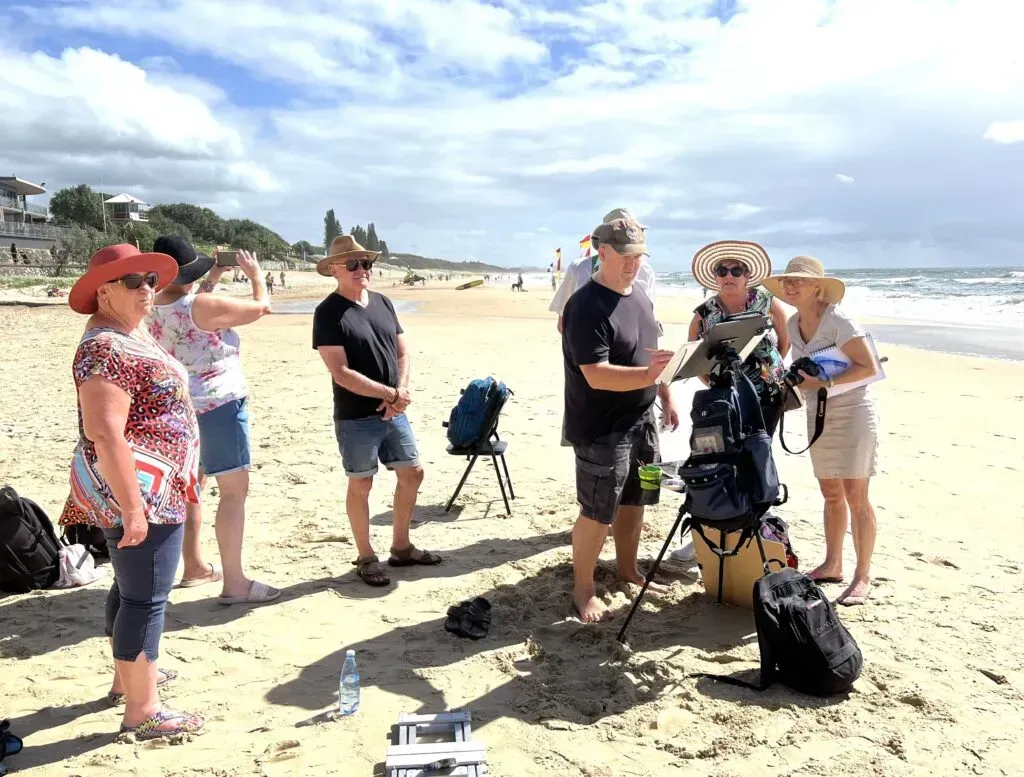
One of the best ways to start plein air painting is with a group. You'll learn faster, pick up tips on setting up and have a lot more fun.
Many of my workshops include optional plein air painting alongside studio sessions. In 2027 I'm running two events built around painting on location:
Peninsula Impressions 2027. A 7-day Australian Impressionist tour on the Mornington Peninsula, Victoria (4–10 March 2027), run in conjunction with Dromana Art Gallery. We'll retrace the footsteps of some of Australia's great Impressionist artists, and it's part workshop and part plein air. Details here.
Noosa Impressions 2027. A 5-day Noosa plein air and workshop event (3–7 May 2027). We'll spend part of our time at Moore Art Gallery in Cooroy and part painting on location at the Noosa River and other local spots. Details here.
Places are strictly limited. See the full Calendar of Events and Workshops With Rod for everything coming up.
Frequently Asked Questions
What is plein air painting?
Plein air painting means painting outdoors, directly from life. The term comes from the French en plein air, meaning "in the open air". The Impressionists, and Australia's Heidelberg School painters, made it famous.
Is plein air painting hard for beginners?
It's challenging because the light changes and conditions are unpredictable. But it's very achievable when you keep your kit simple, paint small and follow a clear process: choose your idea, simplify into big shapes, block in, then refine a little.
What do you need for plein air painting?
A limited palette of the three primaries (a blue, a red and a yellow) plus white, a flat brush, a fan brush and a script liner brush, a palette knife, small panels or canvas boards, a palette, rags, and a lightweight easel or pochade box. Add a hat, sunscreen, water and a way to carry a wet painting home.
What is the best medium for plein air painting?
There's no single best medium. Oils and water-mixable oils stay workable for longer. Acrylics dry fast, which is handy for layering but can be tricky in the heat. Gouache is compact and great for small sketchbook studies. Start with the medium you already know.
How long should a plein air painting take?
Many painters aim to capture the main light effect in a session of an hour or two, because the light keeps changing. Working small and treating your paintings as studies helps a lot.
Can you paint plein air with acrylics?
Yes. Acrylics work well outdoors. They clean up with water and dry quickly. On hot or windy days, put out smaller amounts more often, keep them out of direct sun and work briskly.
Ready to Take Your Painting Outdoors?
Plein air painting will sharpen your eye like nothing else. The secret is having a simple, dependable process you can rely on when the light is moving.
If you'd like to build that process at home first, start with the 5 Day Painting Challenge. It simplifies painting down to 3 colours, 3 brushes and 3 steps. Or join Moore Method Monthly (US$29 a month), where you'll paint a full video project with me each month and keep building your skills. For the complete library of 75+ courses, take a look at the Learn To Paint Academy.
And if you'd love to paint outdoors with me in person, check the Calendar of Events. I'd love to see you out there. Pack a hat, put out plenty of paint and just have a go!
About Rod Moore
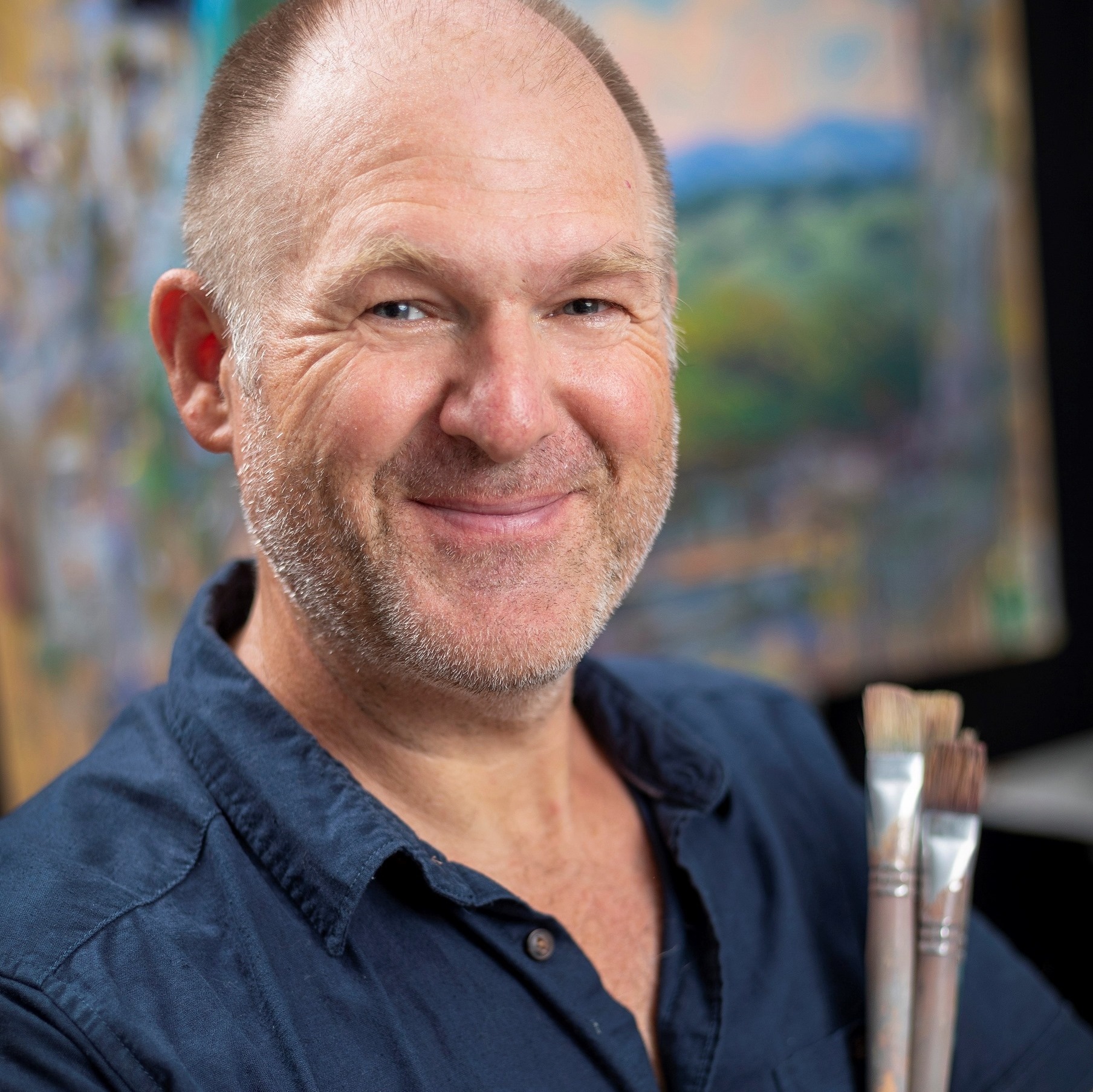
Rod Moore is an Australian contemporary impressionist landscape artist based in the Noosa area of Queensland. He is the creator of the Moore Method of Painting and the founder of the Learn To Paint Academy, and has taught more than 120,000 students in 30+ countries. He is also the star of the TV shows Plein Air Painting TV and Yes You Can Paint TV. Learn more at moore.art, or join him at Moore Method Monthly.